
You might be living in sleep deprivation without knowing it.
Do you wake up feeling tired? Even during a weekend day when you slept 8+ hours? Maybe you have trouble sleeping, and think that alcohol, video games, or exercise right before bed will help you sleep well.
Sleep is not something that you lose one day and compensate the next day. A weekend catch-up of sleep doesn’t allow for a full recovery after a week of poor sleep.
The reality is that trading sleep for output destroys your focus and capacity to be productive in the long run.
I lived many years thinking that “tired” was a normal state. Then during a 3-month sabbatical (back in 2023) I got to experiment with my sleeping habits. I learned how much sleep I actually need (8 hours), and that waking up feeling rested is still possible in my 30s.
What I got wrong about sleep
Sleep is a high priority for our body. When we are young we tend to underestimate sleep. I remember tweeting once “sleep is for the weak!”
It took me many years (and a wife who’s a pro at sleeping) to understand the power of sleep. Before I thought sleep was a productivity killer, but now I see that it’s a requirement for productivity.
Modern science gives us a growing list of benefits. I see sleep as proper maintenance for your cognitive skills. It helps us learn better, age better, and remember more.
How to improve your sleep
Getting a good night of sleep comes down to habits. And as with every habit, your environment plays a key role.
Here’s what’s working for me. Feel free to steal what resonates with you:
- Consistent bed/wake time: I’ve gotten strict with ending my day instead of spending “just 15 more minutes” working on that personal project. Bonus: Morning sun exposure.
- Wind down period: I get a better night of sleep if I wind down for 30-60 minutes before bed. The only screen I look at is the yellow pages of my Kindle. I used to consider TV shows or games good for winding down, but more often than not I ended up more stimulated than relaxed. Bonus: A cool bed can help a lot with the sleep quality.
- Timing: I have my dinner between 2-3 hours before bed time. I avoid unnecessary intake of alcohol (no, alcohol doesn’t help you sleep well). As for coffee, I try not to drink it after 2pm.
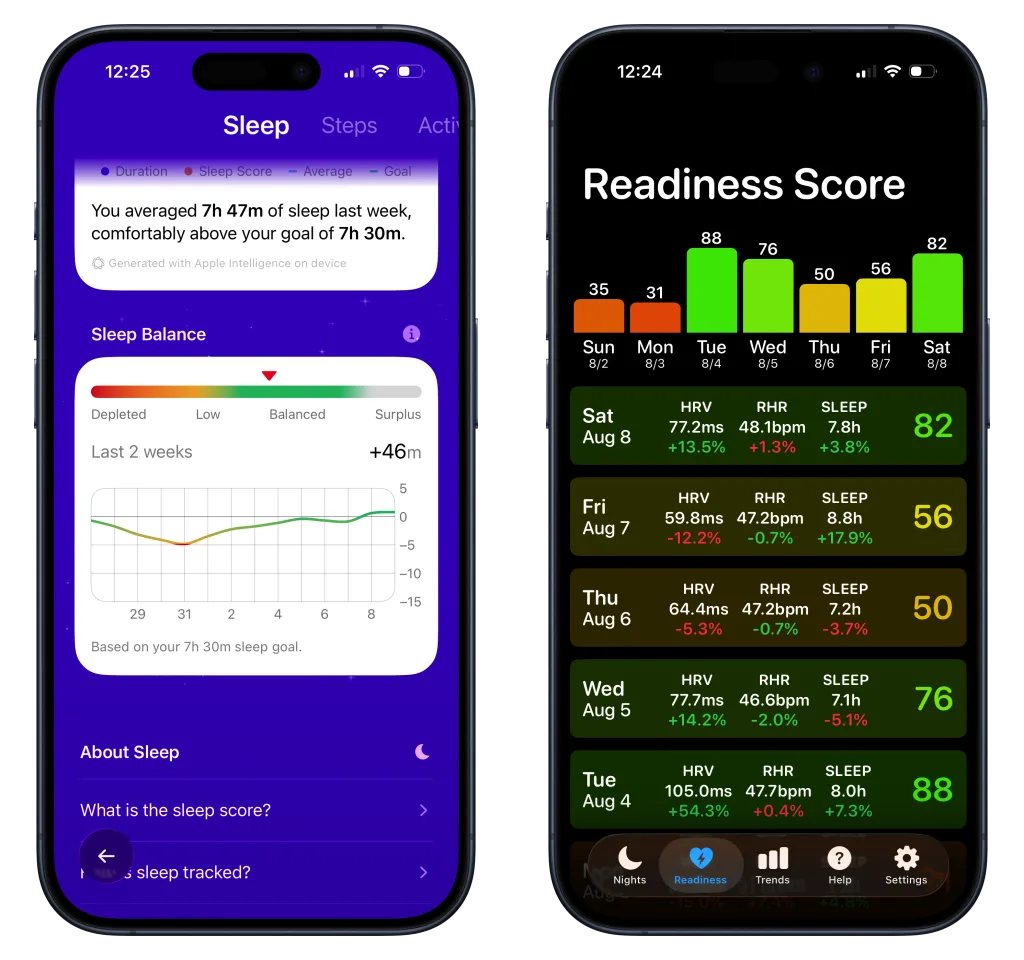
- Sleep tracking: The sleep tracking on the Apple Watch is decent. I try not to obsess over the metrics, instead focus on the time in bed. Keeping this in mind, the two apps I use and recommend are Trackables and Sleep++.
My overall advice: don’t stress over sleep. I’ve been there, it doesn’t help. I heard somewhere that things will be ok as long as you do your best to wake up at the same time. If you can be consistent 80% of the time, that’s a win.
Sleep is hard to understand, and even harder to track and balance. We can only give our best shot through what we can control: our habits. Use sleep tracking as a supportive metric, not as an absolute truth.
When you protect your sleep your life feels better, and productivity comes as a side effect.