
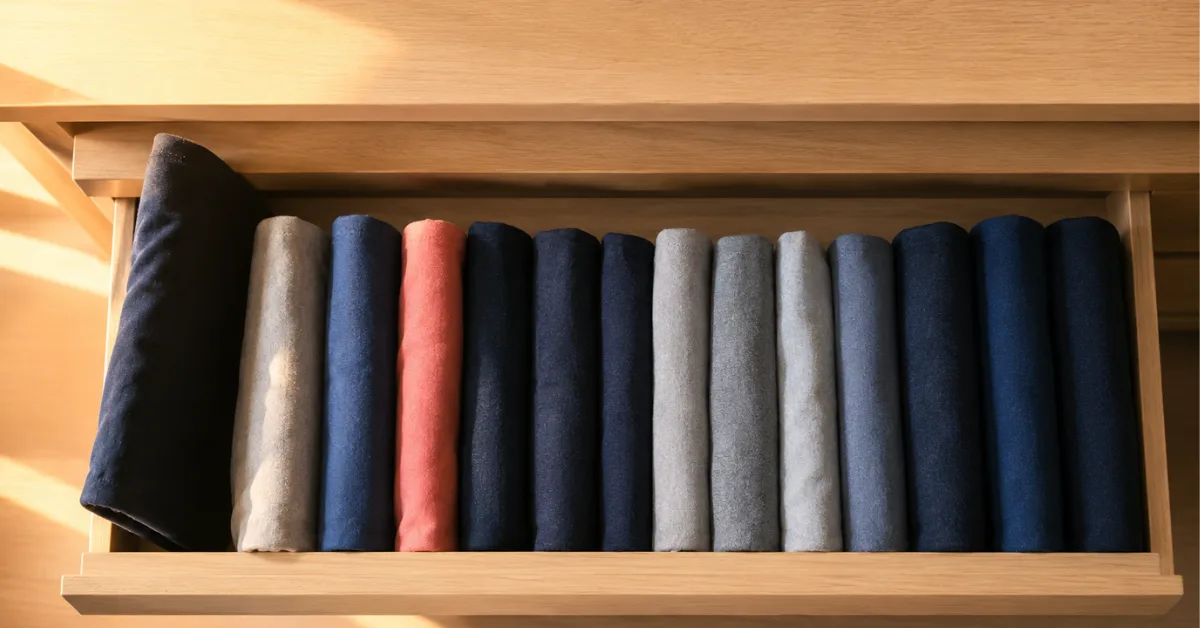
Do you ever feel overwhelmed by mundane decisions? When you have a lot on your plate, small decisions like what to eat or what to wear can drag you down.
The thing is we have a limited number of “good” decisions per day. And our brain treats every decision the same whether it’s picking a t-shirt or prescribing someone’s medicine.
There’s a study from 2014 that found that doctors are more likely to prescribe unnecessary antibiotics late in a clinic session than early.
That’s why we see successful people engineering away the tiny decisions so their best thinking happens exactly when they need it.
If you think wearing the same clothes combination every day is too much of an extreme (and are not crazy about following the latest trends in fashion either) then you’ll like the middle point I built over the years.
I created a clothing system so I don’t have to think what I’ll wear the next day. I started it many years ago and it reached its peak when I read “The Life-Changing Magic of Tidying Up” by Marie Kondo.
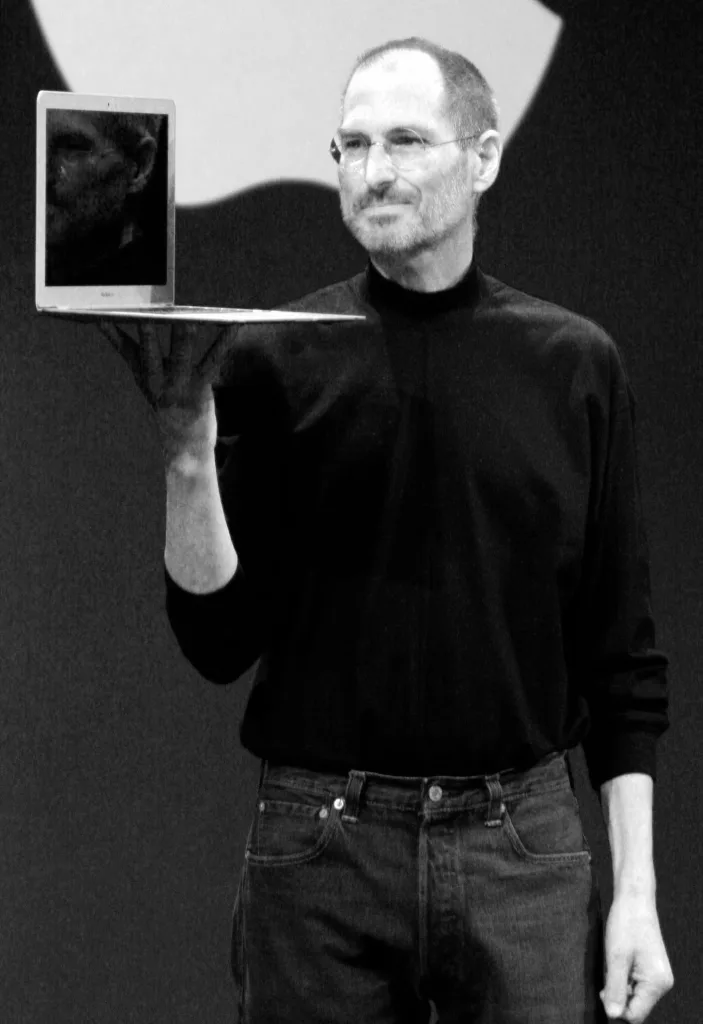
The idea was inspired by Steve Jobs wearing the same clothes every day, which was appealing to me, but it was also too boring because I want to transmit my personality through the t‑shirts I wear.
This system is flexible and allows for serendipity.
The goal is simple: to take anything from my closet and be happy with the outcome.
Here are the three key points that make this possible:
- I usually wear the same combination of clothing every day, which means I have a t‑shirt, pants, and—when it’s not summer—a hoodie.
- I have a standard palette of colors that usually goes from gray, black, and blue to the occasional pink or red for t‑shirts I get from events.
- I don’t keep any clothing that doesn’t give me joy anymore because the day I randomly get this piece of clothing, I won’t really enjoy it.
Your closet as a queue
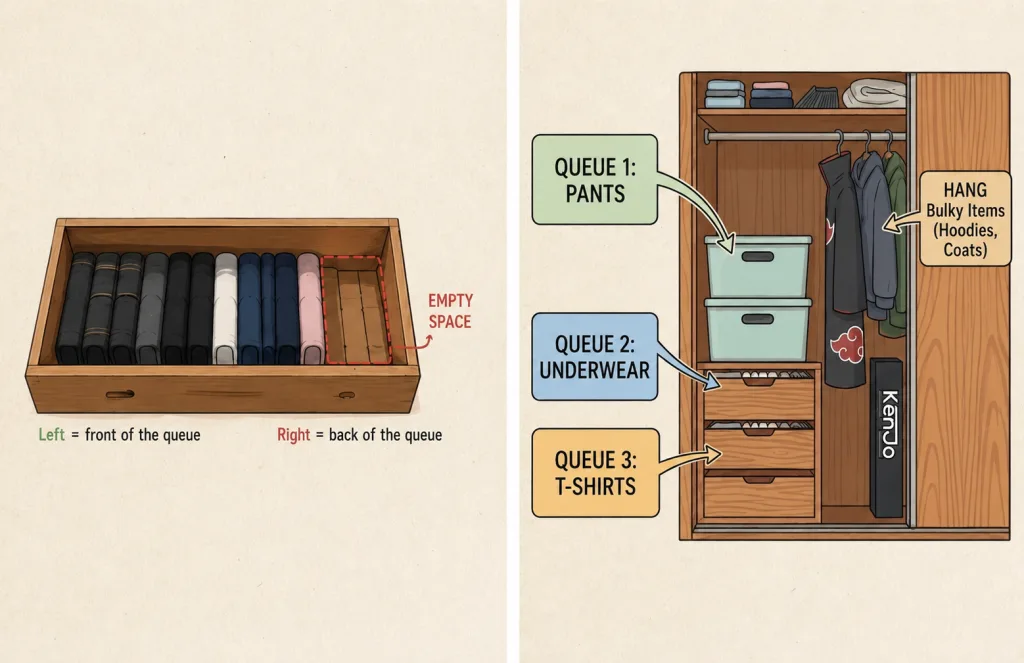
The elements that are relevant are how you store your clothing and the order in which you store it. It works as a queue.
One of the advantages of this system is that it saves space. Which is something my wife appreciates!
I only hang bulky stuff, everything else goes in drawers or boxes. For this to work you need to properly fold your clothes. I recommend the Konmari Fold:
With the basics covered, here are the steps to the system:
- Classify the clothing: t‑shirts, pants, underwear, etc.
- Fold the t‑shirts, the pants, and the underwear using the Konmari Fold.
- Store your classified clothes in drawers or plastic boxes in the form of a queue.
- Establish how you pull from that queue: Take the t‑shirt, pants, and set of underwear the day before. Each time, you pull from the queue from the left, and then push everything else, leaving space on the right.
- When clean clothes arrive, you store them in the space that you have on the right. This way, you have established a cycle for your clothing.
On serendipity
If all your clothes follow the same pattern, it doesn’t matter what you take from the queue—you will be happy with the result. And not only that, but sometimes you’ll encounter serendipity.
When I meet a group of people I usually get nervous. I look forward to it, but I can’t avoid the feeling. On a few occasions now, it turns out the t‑shirt I’m wearing that day is the one that says: “Don’t panic.”

I’m quite happy with the clothing system because I know I wear everything that’s in my closet. (Except for hoodies. I do pick them because I don’t wear them every day.)
So at the end of a long day when my decision budget is depleted, I can pick my clothes for the next day even with the lights off.