
Table of Contents
For years I told myself I wasn’t a developer. I ignored the evidence and let failures define me.
Once I let go of the myth of the perfect developer, I claimed that part of my identity that had been mine all along.
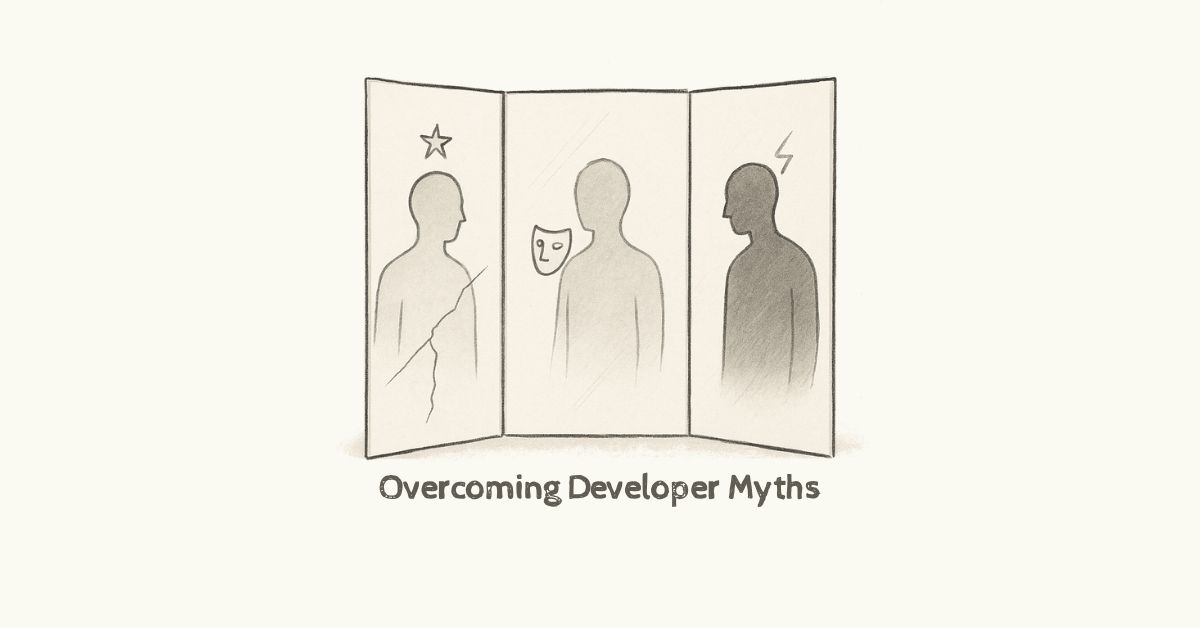
1. The Perfect Developer
“I am good at programming, but I don’t understand enough to become a developer.”
That stuck with me ten years ago. Even today whispers of it still appear.
But here’s what I learned: Wanting to be a better developer is proof you are one. The more you show up, the more you become.
2. The Impostor Developer
“I am not a developer, I put pieces of logic together, which is something anyone can do.”
Early in my career I developed a Kinect app. That project allowed me to give multiple talks. I started all my talks by saying I am not a developer. I was afraid someone would call me out.
Today I know impostor syndrome is common even on senior developers. We tend to focus more on the gap than on the gain.
Daily journaling and quarterly reflections have helped me remember the progress, not just the shortcomings.
3. The Exploited Developer
“If this is what being a developer means, maybe it’s not for me.”
Things were going well until the environment became toxic: unrealistic deadlines, screaming, late hours.
After I quit, I stopped looking for developer opportunities and walked away from programming for 6 years.
There’s always a valuable lesson behind a failure. The faster you learn it, the more power it gives you when the right opportunity comes.
Breaking through the barriers
It took me many struggles to understand that I wasn’t lacking skill or knowledge. My identity was lacking.
Decide who you want to be and act from that identity.
- If you strive to improve, you are already a better version of you.
- If you keep building and shipping, you silence the impostor developer voice.
- If you learn from failure and keep trying, the fear disappears.